Serving personnel and veterans
Hearing loss and tinnitus after military service
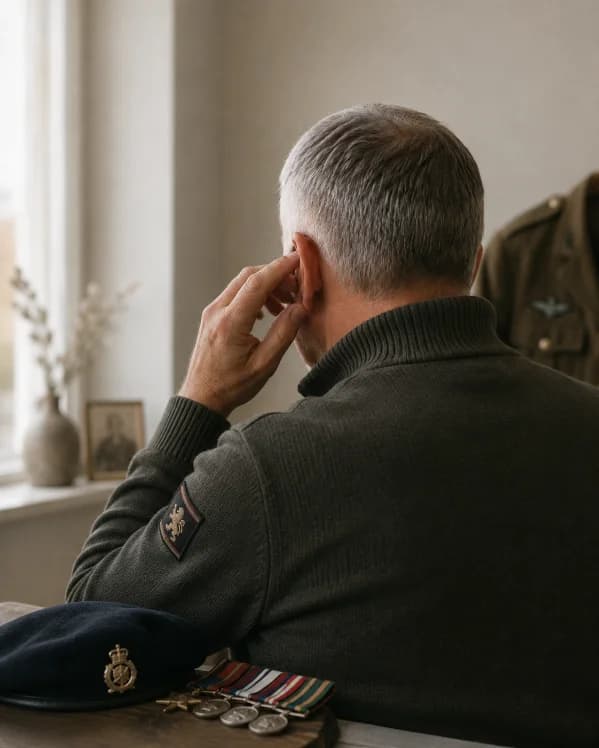
Years of gunfire, aircraft, engine rooms and heavy weapons take a toll that often shows up long after discharge. If your hearing has suffered and you think service caused it, there are several routes open to you — and the first ones cost nothing.
Before anything else
You do not have to pay anyone
GOV.UK is explicit that you do not need a solicitor or a claims management company to apply for armed forces compensation, and that free independent help is available. These routes are open to you whether or not you ever speak to us.
Armed Forces Compensation Scheme
For illness or injury caused by service on or after 6 April 2005. Apply free through Veterans UK.
War Pension Scheme
For service before 6 April 2005. Also free, also through Veterans UK.
Free help with either
The Veterans Welfare Service, and charities including the Royal British Legion and SSAFA, will help you apply at no cost.
What happens if you send the form
You leave a name and a number
Two boxes and two ticks. Nothing else is asked before you send it.
A person picks it up
Not a scoring tool. There is no automatic decision, and no result is shown to you or held back from you.
We ring you to talk it through
Where you served, the noise you were around, and what your hearing is like now. You have committed to nothing by sending it.
A civil claim is a separate thing
AFCS and War Pension payments come from a government scheme. A civil claim against the Ministry of Defence is a different route, usually run by a solicitor, and you can pursue one alongside a scheme award. Which routes suit you depends on when you served, what your hearing is like now, and when you first connected the two.
Time limits, honestly
A civil claim is normally subject to a three-year limit running from when you first knew — or ought reasonably to have known — that your hearing loss might be linked to service. When that date falls is a legal question, not an arithmetic one, and it is decided on your particular facts. Courts can also extend the period in some circumstances.
Treat this claim with caution
You may have read about settlement arrangements agreed between the Ministry of Defence and particular law firms for their own clients. Those terms belong to the firms that negotiated them, and the MOD has reserved the right not to offer the same terms to people represented elsewhere. We cannot promise you access to any such arrangement, and you should treat anyone who does with caution. If this matters to you, ask the firm you are considering, directly.
What we do, and what we do not
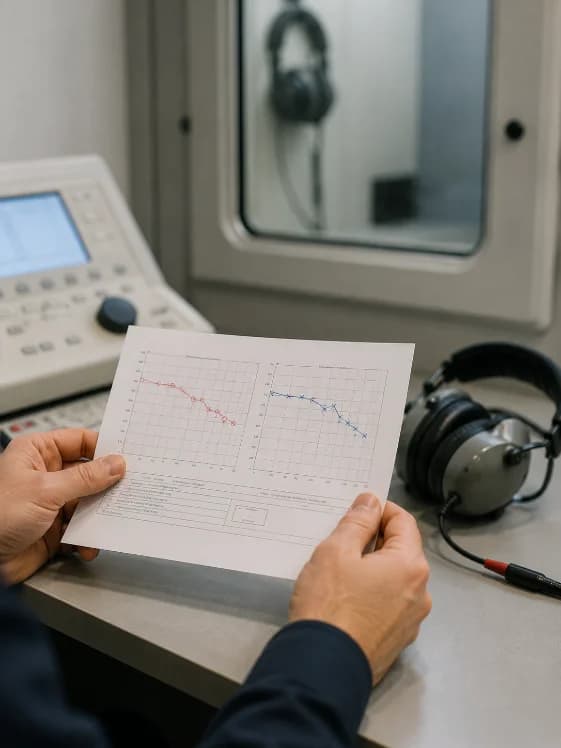
RemedyBridge is a claims management company, not a law firm. If you send us the form below, a person reads it and gets in touch to talk it through.
We do
- Read every enquiry a person sends us.
- Ring you back and talk it through.
- Point you at the free routes whether or not you use us.
- Refer you to a specialist solicitor only with your explicit consent.
We do not
- Decide whether you have a claim.
- Tell you whether you are in time.
- Put a value on a claim — anyone answering that from a web form is guessing.
- Promise you access to any MOD settlement arrangement.
Knowledge centre
Understand it before you decide anything
Plain-English explanations of the routes, the deadlines and the law, each one showing when it was last checked and against which primary source. No page here will tell you whether you have a claim.
Noise-Induced Hearing Loss (NIHL): A Guide for Serving Personnel and Veterans
What NIHL is, how military noise damages hearing, and what an audiogram can and cannot establish. A medical explainer, not a claims pitch.
Acute Acoustic Trauma: Military Blast, Gunfire and Sudden Hearing Damage
Sudden hearing damage after blast or gunfire. MOD policy says assume it and refer urgently — because some treatments work best early.
Hearing Loss Types: Sensorineural, Conductive and Mixed Hearing Loss
Sensorineural, conductive and mixed hearing loss: how air and bone conduction tell them apart, and what a military surveillance audiogram cannot show.
Hyperacusis and Sound Sensitivity After Military Noise Exposure
When everyday sound becomes painful: hyperacusis, how it differs from misophonia and recruitment, the blast research, and why silence makes it worse.
Tinnitus and Military Service: A Guide for Serving Personnel and Veterans
What tinnitus is, why it is not the same question as hearing loss, and what Abbott decided about tinnitus that starts years after service.
How to Read a Military Audiogram
Frequencies, decibels, O and X, and the 4 kHz notch — what the chart records, and what it cannot tell you.
What Is rM-NIHL? The Military Hearing Loss Diagnostic Method Explained
The method the High Court preferred — and the research published three months later that complicates it for older veterans.
Speech-in-Noise Difficulty and Military Hearing Loss
Why you can hear in a quiet room but not a restaurant, what a pure-tone audiogram misses, how speech-in-noise tests work, and what Abbott v MoD decided.
What Your Military Hearing Grade Means: H1, H2, H3 and H4
What H1, H2, H3 and H4 mean on a military medical record, the threshold sums behind each, and why an H grade is not a diagnosis or a compensation band.
Hearing Protection After Military Hearing Damage: What Veterans Should Do Now
Protecting the hearing you have left without fearing ordinary sound: what to use and when, why fit beats the rating, and why hearing aids are not PPE.
Tinnitus Treatment and Management for Veterans
What helps tinnitus: assessment, hearing aids, the stepped psychological care NICE recommends, sound and sleep, and how to judge private treatments.
Hearing Aids for Veterans with Military Hearing Loss
NHS aids are not automatically inferior, and Abbott did not create a right to premium private ones. Lambie got £27,350 for aids; Craggs got none.
Military Hearing Loss and Work After Service
Working with military hearing loss: reasonable adjustments, Access to Work, what to tell an employer, and why a good career can still mean disadvantage.
Help and Support for Veterans with Hearing Loss
NHS, veteran-specific and charity support for hearing loss and tinnitus — none of which requires you to make a claim.
Military Hearing Tests and Audiograms Over Time
How recruitment, surveillance, incident, release and civilian hearing tests fit together across a military career, what each can show, and what H1–H4 mean.
Military Medical Records and Hearing Tests: What Veterans Can Request and What the Records Mean
Your service record, your medical record and your hearing-surveillance record are not the same thing. What exists, what it means, and how to ask for the right one.
Witness Evidence in Military Hearing-Loss Claims: Family, Colleagues and Former Service Personnel
What family and former colleagues can genuinely prove — and the line Abbott drew between corroborating a complaint and proving a symptom.
Why 15 May 1987 Matters in Military Hearing-Loss Claims
A legal cut-off, not a medical one. What Crown immunity means for service before that date, and why a career spanning it is not a yes-or-no question.
What Is the MOD Military Hearing Loss Matrix?
Not a compensation scheme, and not an admission that service damaged your hearing. What it settled, what it left open, and the 31 January 2027 deadline.
Civil Claim vs AFCS vs War Pension: Military Hearing Loss Routes Explained
Three routes, not three names for one process. Different tests, different dates, different payments — and one hearing-specific rule that pays nothing below 20%.
Military Hearing Loss Compensation and Damages Explained
Two Abbott claimants both won, and got almost nothing in common. Why no calculator can value a military hearing claim.
Military Hearing Loss Time Limits: Civil Claims, Matrix, AFCS and War Pension
Three years, seven years, 31 January 2027, no time limit — four clocks belonging to four different systems, plus the overseas-operations longstop.
Ask us to get in touch
Just your first name and a mobile number, so a person can ring you back. Nothing here is a decision about your claim, and nothing is ticked for you.
A person will ring you back. We are not a law firm and nothing here is a decision about your claim. You never have to use a paid service — the free routes are above.